
The trap of multiple projects
Trying to give every project equal attention will leave you overwhelmed and making little progress on any of them.
Working on multiple projects won’t get you very far with any of them, and I know this from experience.
As I briefly mentioned in my latest post, which introduced a new format, I got swamped with a lot of projects and obligations competing for my attention, and I barely made any progress on most of them, which included my newsletter.
In this post, I’ll explain how juggling all these multiple projects affected me, what I learned from the experience, and what I’m doing differently now.
Where Did All of My Time Go?
I had about 10 active projects outside of work, and I had to split my attention between all of them. From the 20 hours of free time that I had each week, I was only spending about 2 hours on each project.
The result was predictable: I ended up with no free time for socializing, my procrastination problems got even worse, and I barely made a dent in my task lists. All while time flowed past me like a river.
It felt hopeless. I was running in circles while the deadlines crept in, and empty promises haunted me, even in my dreams. I started cutting down on my time for hobbies, and my anxiety and stress were driving me crazy.
You might have felt the same at some point, with your time getting fragmented between all of your existing projects, new project ideas, and new obligations being added to your plate. Even though you constantly work on these projects, they still feel far from finishing, and your interest starts to wane, or even turn into hatred — as has happened to a few projects of my own.
The Journey Seeking for a Solution
Since March 2026, I’ve been searching for solutions that would help me finish more projects without cannibalizing my time for hobbies, while still allowing me to maintain a sustainable routine.
Each solution that I tried had varying degrees of success. Some worked well, while others didn’t help me at all.
Below is a list of the solutions I documented in my notes app, along with how I applied them, ranked by how much they improved (or worsened) my relationship with my projects.
#1 - Changing Productivity Systems
Impact: noticeably negative.
While I technically started doing this since 2025, changing my productivity system was one of the first things I tried after getting overwhelmed.
Here’s a non-exhaustive list of some of the productivity methods I tried:
The Pomodoro Method.
Time Blocking.
Time Boxing.
GTD.
The One Thing.
The Ivy Lee Method.
ZTD.
Time Sector System.
Eisenhower Matrix.
PARA method.
Personal KanBan.
Eat The Frog.
Bullet Journal.
Medium Method (mixing digital GTD with a paper Bullet Journal).
I thought that changing my productivity system would help me get much more done than before, give me more head space for deep thinking, and make me more organized.
Boy, was I wrong.

If you’re in productivity limbo like I was (theoretically still am, as I constantly tinker it as a hobby, but I would not recommend it to anyone), you might think you’re going to get more done. In reality, until you figure out how the new productivity system or tool works, whether it makes sense for you, and whether it actually produces real results.
Any new system will create more work for you at the first, before it starts becoming useful. You have to figure its ins and outs before you can get something valuable out of it.
My key takeaway from this is that it’s better to change a few things you dislike on your current system than to start over with an entirely new one.
#2 - Work on All Projects at Once.
Impact: Slightly negative.
The next thing I tried was working on all of my projects at once.
I made an elaborate weekly time-blocking plan that specified which project I would work on and when. Every project would get similar or equal amount of hours each week. It felt like the perfect answer to all of my problems.
Turns out, it wasn’t.
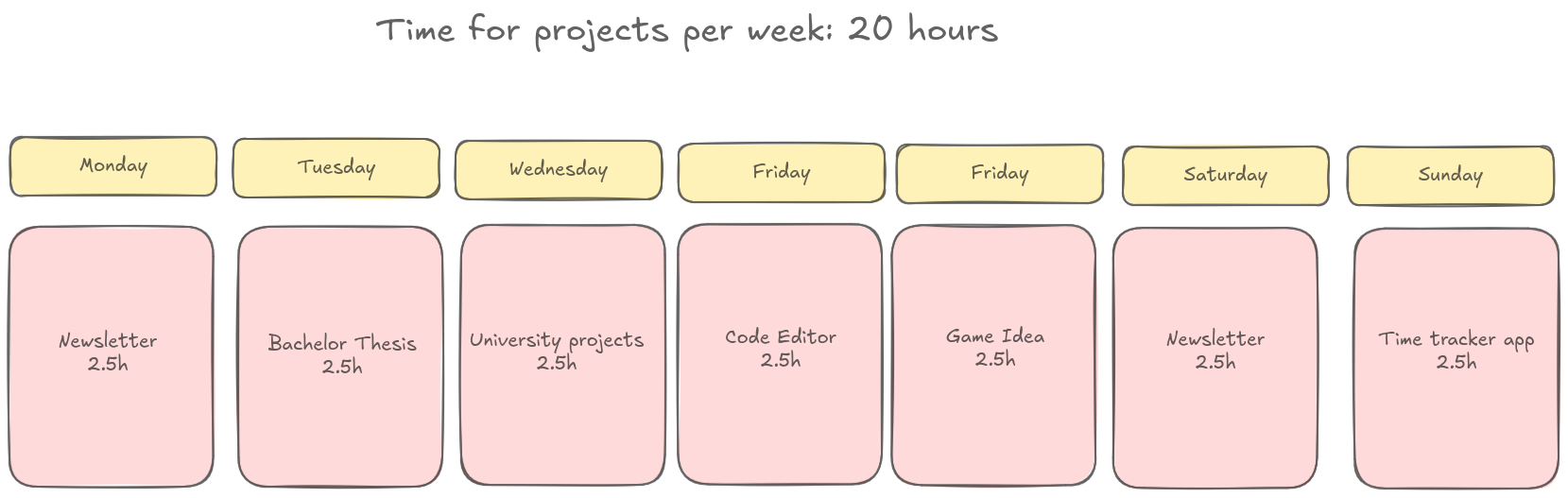
Working on all of my projects did allow me to make a bit of progress on each of them and get better prepared for everything I had to tackle. But it came with the drawback of constantly switch contexts, which was very mentally taxing.
Another issue was that I couldn’t get deeply into a specific project before having to move on to another one. I would start working on a specific feature or issue for 1-2 hours, only to have to switch to another project in the next time block. Then I’d have to figure out what I should be working on, spend another 45 minutes getting back up to speed, and try to finish whatever I could before the focus time ended. Then I’d move on to yet another project and restart the cycle.
#3 - Work on Only One Project
Impact: Slightly positive.
After realizing that productivity systems wouldn’t make me more productive by themselves, and that working on all my projects at once had diminishing returns, I went to the other extreme: finishing one project at a time.
It worked like this: if I didn’t have a very close deadline for another project (such as having to prepare a seminar in two days), I would work on one project and that project only. All other projects would go back into the “backlog” and wouldn’t get my attention until I was happy enough with the current project or had reached a major milestone.
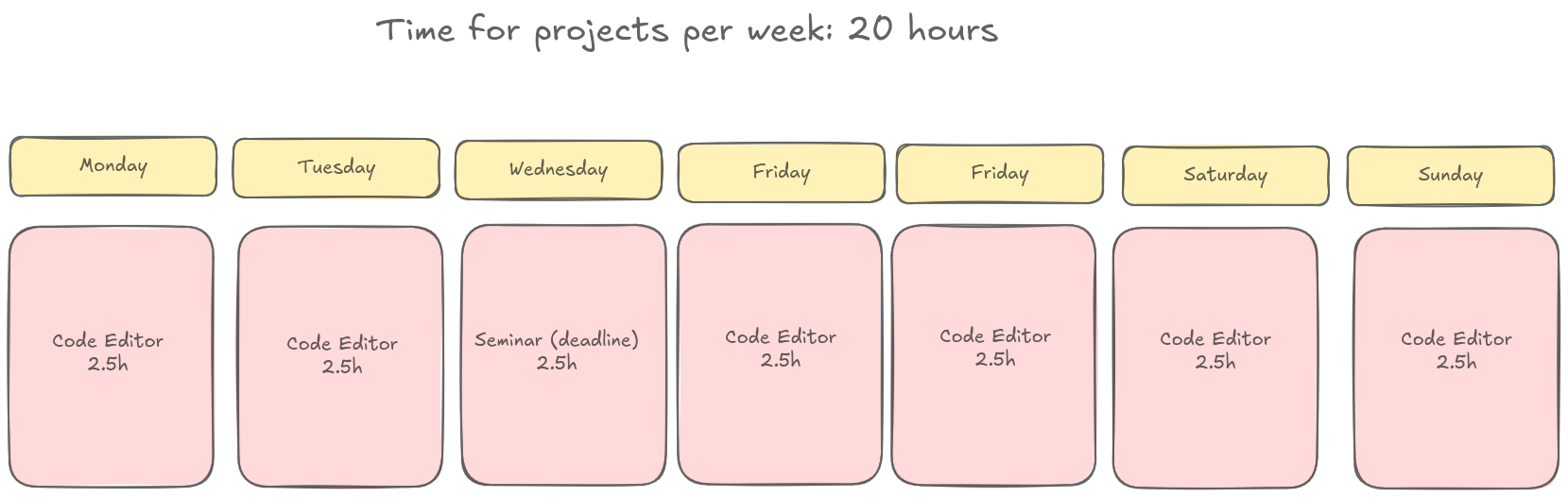
It worked, just not for everything. I used this strategy with a project called Compilai Mobile, a code editor for a pseudocode language called Portugol that I created instead of using our existing website on mobile. In a single month, I finished the entire interpreter, turning pseudocode into a real programming language, and completed 80% of the UI (although it was quite ugly).
However, my other projects would sit in the backlog for weeks or months without receiving any attention, and deadlines would eventually barge in, all at once. Some projects that required consistent effort, such as this publication, would end up being abandoned.
So, in summary, I was getting a lot done on a single project, but I was still getting overwhelmed by deadlines from inactive projects. I needed to find a balance.
#4 - Give 80% of my Time to a Single Project
Impact: noticeably positive.
This is the approach I currently use to manage my projects.
Instead of having a single project that I work on throughout the week or month, I now choose one project to be my main focus and dedicate 80% of my available time to finishing it. The other 20% is divided among all the other projects in my backlog. Although it isn’t necessary, I also adjust how much time I give to each project based on its importance and the deadlines I have to meet.
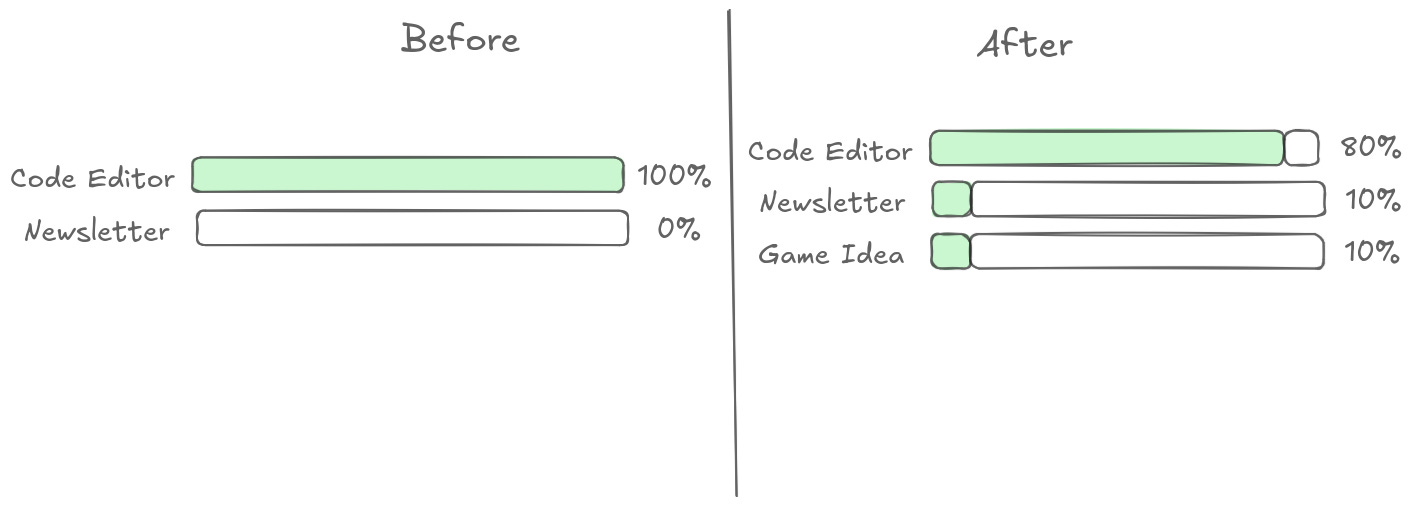
This still allows me to make large amounts of progress on my main project in a relatively short amount of time, while also letting me spend some time on the other projects that still need attention, like this publication.
For me, this has been the best way to get things done in a timely manner without letting everything else fall through the cracks.
Parting Thoughts
Having multiple projects and responsibilities competing for your attention is something you’ll have to deal with throughout most of your life.
Trying to do everything at once will leave you constantly switching between tasks, making it harder to finish anything well enough to be proud of.
Focus deeply on one thing at a time, but don’t let everything else fall apart while you do it.
As a productivity nerd, i had no idea there were THAT many frameworks for beating procrastination